As retail operations grow increasingly complex, understanding the precise role of a retail management system is essential for maintaining financial control and ensuring seamless multi-channel efficiency. This guide provides a clear, expert-led Retail Management System Definition, helping you navigate the distinction between basic point-of-sale tools and comprehensive enterprise solutions. By the end of this article, you will be well-prepared to evaluate which software architecture best supports your business’s growth, operational accuracy, and long-term profitability in a competitive retail landscape. Modern management systems are no longer a luxury but a fundamental necessity for any retailer aiming to thrive in an era where digital agility defines success.
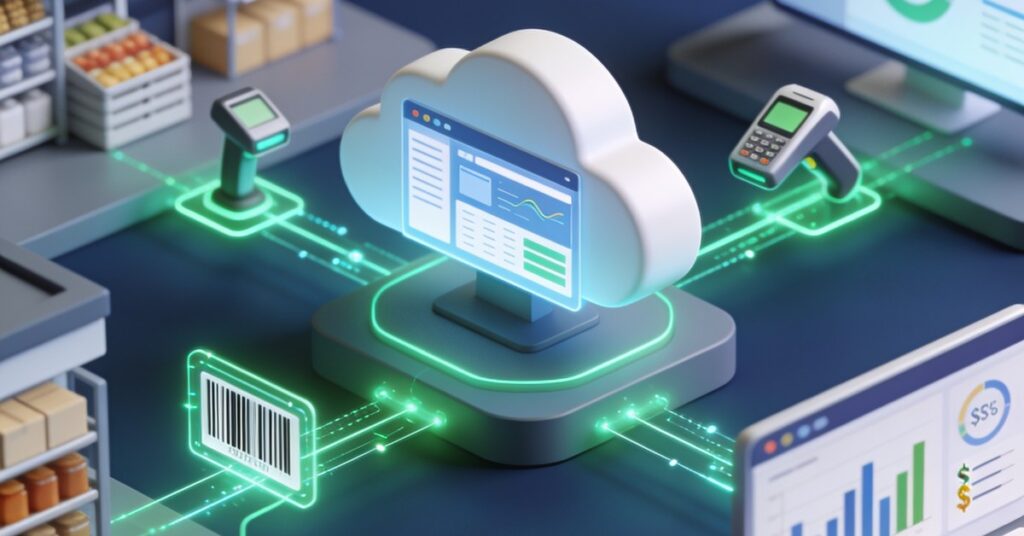
A retail management system (RMS) is defined as a collection of integrated software applications designed to act as a central orchestration layer for modern businesses. It functions by connecting disparate operational pillars—specifically your ERP software, Point of Sale (POS) hardware, eCommerce platforms, and Warehouse Management System (WMS)—into a single, cohesive ecosystem. These systems are typically cloud-based and modular, allowing retailers to scale their operations across physical stores and online shops simultaneously. By centralising these core components, including inventory management, CRM, and staff management, a robust retail management system provides the backbone required to coordinate functional retail operations with precision and speed. Implementing such a solution also helps retailers stay ahead of the curve by providing a unified view of your entire supply chain, from the initial purchase order to the final customer delivery.
Retail management system definition
A retail management system (RMS) serves as an all-encompassing software solution designed to streamline the operations of a retail enterprise. By consolidating vital functions such as stock control, point-of-sale (POS) processing, and client data management into a single, unified interface, these systems facilitate enhanced operational efficiency and data precision across a brand’s daily store activities.
Core functionality and features
Modern retail environments rely on sophisticated digital architecture to remain competitive. An effective RMS integrates several essential modules to ensure seamless daily management:
- Inventory Tracking: Provides real-time visibility into stock levels, helping to avoid shortages and automating the procurement process when supplies run low.
- Point of Sale (POS): Manages the transactional side of the business, facilitating secure payment processing and the generation of sales receipts.
- Customer Relationship Management (CRM): Stores profiles of shoppers, monitors their historical transaction patterns, and manages loyalty schemes to boost retention.
- Staff Oversight: Simplifies workforce management by handling shift scheduling, monitoring working hours, and defining internal access permissions.
- Reporting and Analytics: Delivers actionable insights by generating comprehensive reports on sales performance and long-term commercial growth trends.
Differentiating an RMS from a standard POS
While often confused, there is a clear distinction between a basic point-of-sale terminal and a comprehensive retail management system. A POS system is primarily focused on the checkout stage and the facilitation of customer payments. In contrast, an RMS acts as a holistic ecosystem that encompasses the entire business operation; it includes POS capabilities while extending functional control into inventory logistics, human resources, and business intelligence reporting.
Why retail enterprises implement an RMS
The primary advantage of adopting an RMS is the centralisation of business data. By harmonising disparate operational tasks into one platform, retailers can significantly reduce human error and improve the speed of their internal processes. Whether it is synchronising inventory updates or coordinating employee assignments, an RMS allows store managers to maintain complete oversight of their business from a singular, digital vantage point.
What Is a Retail Management System? Core Definition and Key Functions of Retail Management
An RMS serves as the digital brain of a retail enterprise, ensuring that data flows seamlessly between the front-of-house sales environment and back-end administrative functions. When you investigate a formal Retail Management System Definition, you quickly realise that management involves more than just tracking sales; it is the process of aligning front-end retail execution with back-end supply chain management. By integrating tools like Oracle NetSuite or Shopify, businesses can move away from siloed manual processes and embrace a unified view of their entire operation. Does this sound familiar to your current business situation, where your inventory software and accounting tools refuse to talk to each other? The lack of synchronisation is usually the primary driver for a Retail Manager seeking a more robust Retail Management System Definition and implementation strategy. Effective management is the process of ensuring that every component of the retail sector, from procurement to the final checkout, works in harmony. The key functions of retail management include data synchronisation, real-time reporting, and the ability to pivot strategies based on live consumer behaviour.
Essential Pillars of Modern Retail Management Systems
- Inventory Control: Real-time tracking to prevent overstocking or stockouts, which is the heart of any successful retail business.
- POS Integration: A unified interface for processing transactions across all channels, essential for modern retail operations.
- CRM Module: Centralised customer data to fuel loyalty, retention, and superior customer satisfaction.
- Staff Management: Automated tracking of employee performance, scheduling, and retail roles to boost productivity and morale.
- Retail Accounting: Automated financial reconciliation to ensure that every transaction is accounted for without manual intervention.
Operational Benefits and Effective Retail Management
The primary benefit of implementing an RMS is the drastic reduction in operational friction, achieved by replacing manual, paper-based, or spreadsheet-reliant systems with automated digital workflows. From my own experience, moving away from manual spreadsheets is the single biggest „win” an owner of a retail store can achieve; it stops the „death by data entry” cycle and lets you focus on actual sales strategies. By using an integrated retail system, you reduce human error and ensure that your sales data is always accurate. Furthermore, these systems allow you to automate routine tasks, which frees up your staff to focus on enhancing the in-store customer experience. The following table highlights why this transition is critical for your bottom line and overall business growth:
| Feature | Manual/Spreadsheet System | Modern Retail Management System |
|---|---|---|
| Inventory Updates | Delayed, prone to human error | Real-time, automatic |
| Pricing Accuracy | High risk of calculation mistakes | Automated, system-wide updates |
| Reporting | Manual, time-consuming | Instant, data-driven insights |
| Staff Efficiency | Low, requires constant oversight | High, performance-based tracking |
Distinguishing the POS System from the Right Retail Management System
The fundamental difference between a POS system and an RMS is that a POS is focused strictly on daily in-store transaction management, whereas an RMS incorporates comprehensive ERP functionality to manage the entire business backend. While a POS is primarily designed for single-location or small shops and features tools like credit card processing, barcode scanning, and cash drawer management, an RMS is built for the complexity of multi-store, omnichannel, or rapidly growing retailers. An RMS extends its reach to include warehouse management, formal purchase order creation, and vendor management, turning a simple checkout tool into a robust software solution. For example, a solution like SuitePOS is specifically engineered to provide the transactional power of a POS while plugging directly into the backend management capabilities of NetSuite, ensuring that your retail systems are always aligned with your sales targets. Managing multiple retail locations requires this level of centralisation, as it allows for consistent pricing and stock visibility across the entire organisation.
Strategic Integration and the Importance of Retail Software
An RMS achieves multichannel synergy by acting as the hub that synchronises physical stores, webshops, and mobile apps into a single, cohesive data ledger. Platforms such as Linnworks provide the necessary multichannel order management to keep sales channels aligned, while built-in connectors for Shopify POS and Square POS allow for a seamless, plug-and-play setup. If you are looking to scale your type of retail, follow this process to ensure your tech stack is ready:
- Audit your current sales channels to identify integration gaps in your retail supply chain.
- Select an RMS that offers native connectors for your existing eCommerce platform to help retailers scale.
- Map your inventory data to ensure consistency across all physical and digital storefronts.
- Test the automated sync between your POS and retail accounting software, such as Xero, to ensure tax compliance and clean financial records.
- Implement a unified customer relationship management tool to track buyer behaviour across all touchpoints.
For high-growth businesses, Priority Software offers out-of-the-box (OOTB) integration to eCommerce platforms via a headless commerce engine, ensuring that backend systems remain agile. By integrating tools like Deliverect into this framework, retailers can centralise their sales channels and ensure that inventory and accounting data remain perfectly synchronised across global platforms like Amazon and eBay. This level of integrated retail management allows for better brand management and a consistent shopping experience. Effective management tools will inevitably lead to better retail execution, allowing you to react to market trends in real-time rather than waiting for end-of-month reports.
Selecting the Best Retail Management System for Your Type of Retail Management
Choosing the right retail management system requires an assessment of your specific growth stage, with options ranging from low-cost, entry-level POS setups like Square for Retail to sophisticated omnichannel platforms like Shopify POS and Lightspeed Retail. Important / Remember: Always prioritise a system that offers a robust API or native integrations; if your software can’t „talk” to your accounting suite, you are just building another silo. When evaluating your options, consider the balance between cost and capability; for instance, SafetyCulture (formerly iAuditor) provides a highly accessible entry point with a free version for teams of up to 10 users. At a price point of $24/month for premium plans, SafetyCulture offers a 30-day free trial period and broad accessibility, making it an excellent case study for businesses needing to track performance and compliance without immediate enterprise-level investment. Finding the right system is the cornerstone of any successful retail business, as it allows you to scale without needing a proportional increase in administrative staff.
Future Trends in Retail and Operational Excellence
The retail industry is evolving, approaching a major turning point in 2026, where software integration will move beyond simple inventory management to incorporate autonomous AI agents and predictive analytics. According to the publication „Retail and Consumer Trends 2026: Human-led intelligence,” released on 12 February 2026, we are witnessing a shift toward 40 key trends projected to reach full maturity by 2030. These advancements include the implementation of autonomous AI for dynamic pricing and predictive stock replenishment, as well as the adoption of augmented reality features and connected in-store associate tools. Furthermore, loyalty programmes are evolving from simple point tallies into community-driven, non-transactional membership structures, as updated in the latest analysis on 17 July 2026. Retail management decisions are increasingly based on predictive data rather than historical reports, setting a new standard for competitive retail. By adopting these modern retail operations, you ensure that your brand remains relevant and capable of meeting the ever-changing demands of the modern consumer.
Frequently Asked Questions
How does a retail management system influence staff performance?
An RMS tracks employee hours, individual sales performance, and shift patterns, allowing managers to identify top performers and optimise staffing levels based on real-time traffic data. This transparency fosters accountability and helps in aligning team efforts with overall business goals.
Can an RMS handle international tax and currency requirements?
Advanced systems typically include multi-currency support and automated tax calculation engines that adjust based on the jurisdiction of the sale. This is essential for retailers expanding beyond a single country’s borders to ensure full compliance with local financial regulations.
Is cloud-based retail software secure for sensitive customer data?
Modern cloud providers employ enterprise-grade encryption and regular security audits, which often exceed the security measures of locally hosted, legacy hardware. By centralising customer relationship management data, these systems provide a safer, more controlled environment for managing customer privacy and loyalty information.
What is the most effective way to migrate to a new management system?
The most effective migration strategy involves a phased rollout, starting with inventory data synchronisation followed by the integration of the POS hardware. Working with a dedicated implementation partner ensures that historical data remains intact while minimising downtime during the transition period.
Choosing a platform that truly unifies your inventory, sales, and accounting data is the single most effective way to remove daily operational stress and prepare your business for long-term stability. Remember that the right system should work as a partner in your growth, allowing you to reclaim your time and focus on what you do best.