In today’s competitive market, mastering Retail Customer Experience is a critical strategic imperative that directly dictates your business’s long-term profitability and customer retention rates. As Evolving Customer Expectations continue to rise, businesses must recognise that the quality of interactions defines the brand. This article provides a professional, data-backed roadmap to help you navigate modern consumer expectations, from integrating seamless omnichannel workflows to leveraging AI and emerging technologies for operational efficiency. By implementing these expert-vetted strategies, you will be well-prepared to transform your service model, reduce purchase abandonment, and build a resilient brand that thrives in both physical and digital spaces.
Retail customer experience
Defining the retail customer experience
The retail customer experience encompasses the entire spectrum of perceptions, behaviours, and responses a shopper encounters when interacting with a brand. This journey spans every touchpoint, including digital browsing, visiting physical retail outlets, and the logistics of post-purchase delivery. Central to this concept are elements such as omnichannel fluidity, bespoke personalisation, and thoughtful store architecture.
Key insights
- Retail customer experience represents the cumulative effect of every brand interaction, from initial discovery through to post-purchase support, acting as a primary driver for business performance.
The essence of retail customer experience
In essence, the retail customer experience is the holistic journey undertaken by a consumer, commencing from the instant they identify a need or engage with a brand’s presence until the final acquisition and beyond.
Strategies to elevate in-store retail experiences by 2026
- Channel Consistency: Strive for uniformity across all touchpoints, as modern consumers anticipate a seamless standard of service whether online or offline.
- Omnichannel Integration: Synchronise physical premises with mobile applications to ensure shoppers enjoy a cohesive, connected path to purchase.
- Tailored Engagement: Leverage data analytics to provide bespoke recommendations, individualised fitting services, and pertinent promotional offers.
- Experiential Design: Transform traditional high-street shops into immersive environments by incorporating interactive digital displays, exclusive events, or augmented reality features.
- Streamlined Payments: Mitigate cart abandonment and reduce queuing times by implementing agile, rapid payment solutions.
Establishing a real-time, cohesive customer journey
Identify your customers at the moment of engagement to facilitate personalised interactions that resonate with their specific needs and preferences throughout their journey.
Measuring your success
To evaluate the efficacy of your strategy, consider these primary metrics:
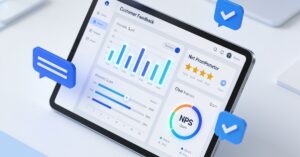
- Net Promoter Score (NPS): Evaluates the likelihood of a customer recommending your retail business to others.
- Customer Satisfaction (CSAT): Gauges the level of contentment immediately following a specific interaction or transaction.
- Customer Effort Score (CES): Monitors how conveniently a client can perform a task or resolve a complication.
The foundation of excellence
By implementing these strategic approaches and insights, retailers can significantly enhance their customer engagement. Explore the tangible impact of the Return on Experience to secure long-term loyalty.
The Foundation and Importance of Retail Customer Experience Strategy
Retail Customer Experience is the sum of every interaction a consumer has with your brand, encompassing the Entire Customer Journey from initial product discovery and digital browsing through to post-sale support. It functions as the primary basis for competitive differentiation, with 89% of companies agreeing that their approach to Customer Experience in Retail is what sets them apart from market rivals. Without a deliberate Customer Experience Strategy, businesses risk significant revenue loss, as 78% of shoppers abandon purchases due to poor service, underscoring the vital need for a seamless, well-managed operational framework. Understanding that Customer Experience is more important than ever allows a business to focus on the core elements of success.
To effectively manage this, a Retailer must recognise that Customer Experiences are a holistic discipline involving store operations, Merchandising, and last-mile delivery. A Price Waterhouse Cooper study highlights that 73% of shoppers cite the Importance of Customer Experience as a major factor in their purchasing decisions, proving that service quality is as important as price. Developing a robust framework involves utilising key Customer Experience Metrics to measure success, which helps in identifying friction points before they impact your bottom line. By focusing on Customer Sentiment and gathering regular Customer Feedback, you create a feedback loop that informs your long-term CX Strategies. Metrics such as the following are essential for any business looking to Improve the Retail Experience:
- NPS (Net Promoter Score): Gauges overall customer loyalty through targeted surveys.
- CSAT (Customer Satisfaction): Measures satisfaction with a specific, recent interaction.
- Customer Effort: A Metric evaluating how easy it is for a Shopper to achieve their goal.
Optimising the In-Store Retail Experience and Improving Customer Experience in Retail
Physical retail remains the dominant force in the industry, with projections indicating that brick-and-mortar locations will account for 83.8% of retail sales in North America for the fourth quarter of 2024. Investing in the In-Store Retail Experience is not an outdated strategy but a necessity to capture the majority of market share. Forrester forecasts that physical retail will continue to represent almost 80% of global retail sales in 2025, confirming that the high street is far from obsolete. Enhancing the In-Store Experience requires a blend of tactile engagement and modern convenience, ensuring that the physical store acts as a Cornerstone of Retail Success.
Targeting the right demographic is essential, as Gen Z represents a massive, influential segment of the economy; Deloitte reported that this group held over $100 billion in combined global spending power in 2023. Despite their reputation as digital natives, an ICSC survey reveals that 97% of Gen Z respondents still shop at a Retail Store. From my experience, transforming your space into a community-focused hub rather than just a warehouse of goods is the secret to winning over this cohort. By creating an environment that offers immediate product availability and tactile engagement, you can capitalise on the enduring preference for an In-Store Retail environment. A Positive Customer Experience in the physical space is driven by knowledgeable staff and an intuitive layout, which helps in building stronger Relationships with Customers.
Building a Seamless Omnichannel and Digital Retail Experience
An Omnichannel strategy is the practice of integrating POS systems, e-commerce platforms, and inventory tools to ensure that data flows consistently across all customer touchpoints. This level of integration is essential because 73% of retail customers identify as omnichannel shoppers. When companies implement Strong Retail CX, they see significant financial benefits, as detailed in the comparison table below:
| Strategy Strength | Customer Retention Rate |
|---|---|
| Strong Omnichannel | Up to 89% |
| Weak Omnichannel | 33% |
Important / Remember: Achieving this consistency requires a commitment to operational transparency; ensure your Loyalty Programs and tier benefits are applied equally across both Digital Retail Experience channels to avoid customer frustration. With 71% of consumers expecting a Seamless Experience, the technical backbone of your operation must be unified. If your e-commerce site and physical shop operate as silos, you are effectively paying for two separate businesses that do not communicate, which is a recipe for inefficiency and lost revenue. By unifying your Customer Data, you provide the seamless path to purchase that today’s discerning customers demand, ensuring that every Touchpoint reflects the brand’s commitment to excellence.
Leveraging Future of Customer Experience Trends and 2026 Automated Retail
Technology serves as the backbone of modern efficiency, with 91% of businesses now utilising AI to facilitate and improve their customer interactions. By deploying virtual assistants and AI-driven Chatbots, companies can provide 24/7 support, ensuring that customer queries are resolved instantly. To get started with Retail Customer Experience Trends, consider the following technology stack for your business, which helps to Streamline operations:
- Implement CRM software to centralise Customer Data and interaction history.
- Deploy AR tools for virtual try-ons to reduce product return rates.
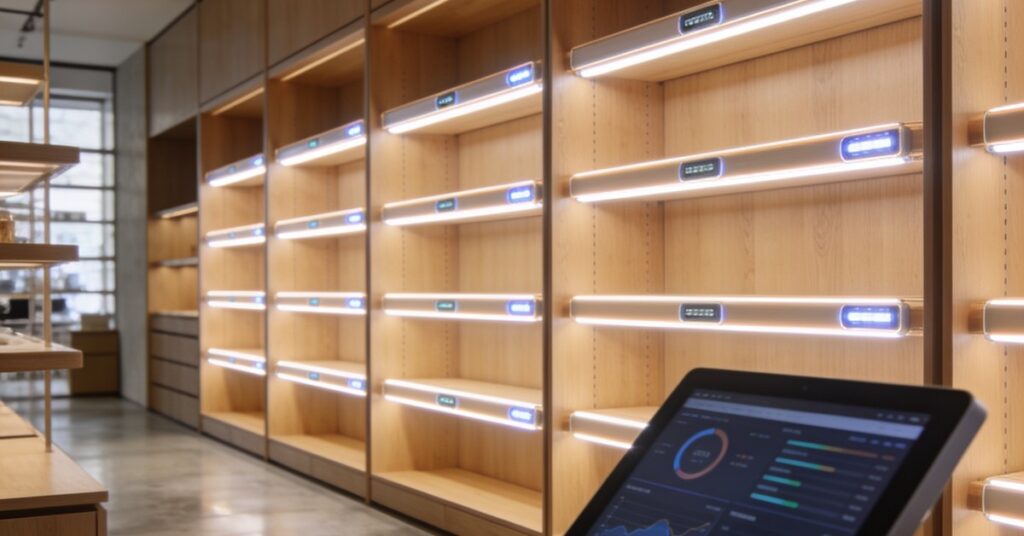
- Integrate IoT sensors on shelves for Real-Time inventory tracking.
- Set up self-service kiosks to reduce checkout friction for busy shoppers.
The Retail Industry is undergoing a fundamental shift towards predictive modelling and automation, with significant Retail Customer Experience Trends already identified for the years 2026 and 2030. Looking toward 2030, the landscape will likely be defined by the integration of automated AI agents capable of completing complex transactions on behalf of consumers. This shift represents a move toward a fully frictionless state where the barrier between desire and purchase is almost non-existent. By leveraging these tools, you can ensure that your Products and Services are always available when the customer needs them, thereby fostering long-term Customer Loyalty.
Addressing Operational Challenges to Improve the Retail Experience
The most effective way to resolve common challenges, such as checkout queues and inventory discrepancies, is to deploy a combination of mobile hardware and integrated data platforms. To address physical register wait times, you should implement self-checkout kiosks or provide floor staff with mobile POS handheld scanners. Many retailers struggle with stock management, but from my experience, syncing your online and physical inventory in Real-Time is the only way to avoid the embarrassment of selling items that are actually out of stock. A Great Customer experience relies on accuracy and speed, both of which are facilitated by modern inventory management.
For your team, deploy mobile knowledge apps that provide frontline employees with instant item lookups, ensuring they can answer customer questions accurately and quickly. Furthermore, utilise a centralised Customer Data platform to track past preferences. By triggering tailored product recommendations based on this history, you create a personalised experience that drives sales. Finally, conduct routine staff training workshops to ensure your team is fully competent in using these new systems and possesses deep product knowledge. A well-trained Customer Service Team is the ultimate competitive advantage, as they turn technical tools into human-centric service interactions that keep customers coming back.
Frequently Asked Questions
How do I choose the right Metric to measure Customer Experience?
The best approach is to combine quantitative data like NPS and CSAT with qualitative insights from mystery shopping and direct Customer Feedback. This multi-layered strategy allows you to capture both the numerical performance of your systems and the emotional sentiment of your shoppers, providing a comprehensive View of the Customer.
What is the most effective way to encourage Customer Loyalty in a digital-first world?
Focus on creating a consistent, personalised experience that rewards the customer regardless of which channel they choose to shop in. By integrating your Loyalty Programs across physical and digital platforms, you create a cohesive brand ecosystem that Loyal Customers find difficult to leave.
How does 2026 Automated Retail change the role of frontline staff?
Automation handles repetitive transactional tasks, which allows your staff to transition into roles focused on high-value advice and personalised service. This shift elevates the human element of your brand, making the shopping experience more meaningful and expert-led, which is essential for Exceptional Customer engagement.
Why is it critical to integrate inventory for a seamless Omnichannel experience?
Integrated inventory prevents the common frustration of „out-of-stock” notifications for items that are actually available in a nearby store. This data transparency is the foundation of trust and is essential for maintaining a high Customer Retention rate in competitive markets where consumers have many choices.
To truly elevate your Retail Customer Experience, focus on unifying your digital and physical inventory systems to ensure a seamless, frustration-free journey at every touchpoint. Your commitment to this operational harmony will not only build lasting trust but also turn every casual shopper into a loyal brand advocate.