
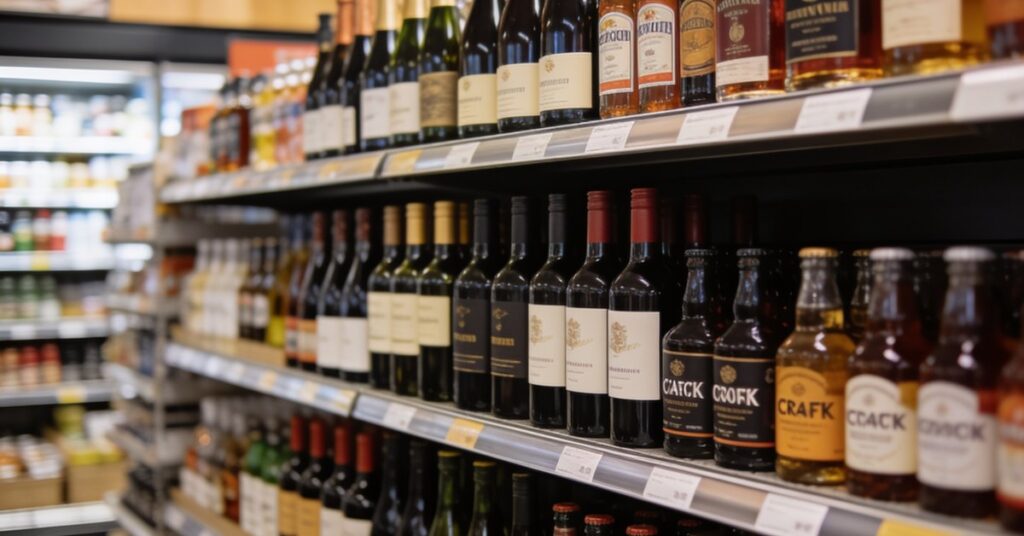
Understanding the regulatory environment of an off-licence is essential for any business owner or manager to ensure full legal compliance and mitigate the risks associated with alcohol retail. In this article, you will learn the precise definition of an off-licence, the specific licensing obligations you must uphold, and the practical steps required to manage customer age verification and public consumption policies effectively. By mastering these core requirements, you can confidently navigate the complexities of the UK retail sector and protect your business from potential penalties.
Spis treści
ToggleAt its core, an off-licence is a specialised retail shop or counter authorised by local authorities to sell alcohol exclusively for consumption away from the premises. When a new entrepreneur asks, What Does Off License Mean in the context of their business plan, they are essentially inquiring about the legal parameters that differentiate their shop from a hospitality venue. This term, widely used throughout the United Kingdom and Ireland, dictates that any alcohol purchased must remain in its original, sealed container, whether it be a bottle or a can of beer, cider, wine, or spirits. For a business owner, this designation is a fundamental legal status that separates your operation from those that serve alcohol for immediate consumption.
What does off-licence mean
Understanding the Term
An off-licence is a retail establishment that possesses a formal legal permit authorising the sale of alcoholic beverages. The essential condition of this licence is that all purchased products must be consumed away from the premises where they were bought.
Common Nomenclature
In the United Kingdom and Ireland, this type of shop is frequently referred to as an „off-licence” or occasionally an „off-sales”. In casual, everyday conversation, locals often use the shorthand term „offie” to describe these businesses.
The Golden Rule of Off-Licences
The operational requirement is straightforward: whilst you may purchase a variety of beers, wines, and spirits at these shops, the law strictly forbids the consumption of these items inside the store or in the immediate vicinity of the doorway. This stands in stark contrast to „on-licence” establishments, such as public houses, bars, and restaurants, where patrons pay a premium to consume alcohol specifically on the premises.
Types of Establishments
Businesses that fall under this category typically include:
- Specialised local wine retailers and independent convenience stores.
- Large supermarkets that hold the necessary permits, allowing shoppers to purchase alcohol alongside their weekly groceries for home consumption.
Clarifying the Definition
It is important to note that „off-licence” is a standard legal designation within British English rather than mere slang. Formally, it denotes any premises specifically licensed to sell alcohol for takeaway purposes. Ultimately, it refers to a shop geared towards those who wish to purchase alcoholic drinks to enjoy at home.
Understanding the Off-Licence Meaning and Business Operational Scope
An off-licence business operates under the strict condition that the retail space itself is not a venue for drinking. The primary operational constraint is that consumption of purchased alcohol is strictly prohibited inside the shop or immediately outside the door, ensuring that the establishment remains a retail outlet rather than a social drinking space. These businesses can range from dedicated, standalone wine shops to smaller corner shops, large supermarkets, and even niche retail counters. Understanding What Does Off License Mean regarding these boundaries is critical for site managers, as it prevents accidental breaches of local licensing conditions.
From a management perspective, overseeing an off-licence requires more than just stock control; it demands a clear understanding of the regulatory burden. Every individual managing or overseeing the daily supply of alcohol must hold a Personal Licence, which serves as proof of their competence and accountability under current legislation. This requirement ensures that there is always a responsible person on-site who understands the legal implications of alcohol retail and can act as the primary point of contact for local enforcement officers or licensing authorities.
Distinguishing Between On-Licence and Off-Licence Usage and Examples
The fundamental difference between these two licensing categories is the intended location of consumption: an on-licence permits the sale and consumption of alcohol within the venue, while an off-licence mandates that all products sold must be taken away from the premises. Ever found yourself trying to explain these subtle regulatory differences to a new staff member during a busy shift? If you have ever wondered What Does Off License Mean compared to a local pub, remember that the former is strictly a retail transaction, whereas the latter is a service-based consumption model.
| Feature | On-Licence | Off-Licence |
|---|---|---|
| Consumption Location | Inside the venue | Away from the premises |
| Product State | Open (pints, glasses) | Sealed (bottles, cans) |
| Examples | Pubs, bars, restaurants | Supermarkets, newsagents |
Business owners should be aware that the type of licence they hold dictates their entire service model and legal liability. While supermarkets, convenience stores, newsagents, and petrol station forecourts are classic examples of businesses operating with an off-licence, they are legally distinct from hospitality businesses. Misinterpreting these boundaries can lead to severe operational issues, as the regulations governing „off-sales” are designed to restrict the immediate consumption of alcohol in public areas, a restriction that does not apply to the controlled, seated environments of on-licence establishments.
Legal Requirements and Licensing Framework for British Booze Retailers
All businesses selling alcohol on a permanent basis must apply for a premises licence from their local council, a process governed by the Licensing Act 2003, which came into force on 24 November 2005. This framework mandates that every shop must name a Designated Premises Supervisor (DPS) who holds a valid personal licence, ensuring clear accountability for all alcohol-related transactions. Furthermore, retailers must note that the automatic entitlement to off-sales permissions is scheduled to end on 31 March 2025, necessitating proactive administrative planning for those who rely on these permissions.
Important: Always keep your licensing documentation and the contact details of your local council’s licensing department in an easily accessible folder, as you may be required to produce these during an unannounced inspection.
Regional compliance is equally critical for business continuity, particularly as regulations can vary significantly across the UK. For instance, in Scotland, retailers must strictly adhere to restricted trading hours for off-sales, which are limited to between 10:00 AM and 10:00 PM. Failure to align your business operations with these specific legislative timings can result in the revocation of your licence, hefty fines, or potential prosecution, making it vital to monitor local council updates and national policy shifts regularly.
Enforcing Age Verification and Responsible Retailing
Retailers are legally required to ensure that no alcohol or tobacco is sold to anyone under the age of 18, a responsibility that necessitates a robust, non-negotiable age verification policy. The industry-standard „Challenge 25” policy is the most effective way to meet this requirement, as it compels staff to request valid identification from any customer who appears to be under 25. By implementing this protocol, you provide your staff with a clear, defensible script to manage customer expectations and prevent illegal sales, including the sale of corrosive products to minors, which is prohibited under the Offensive Weapons Act 2019.
- Conduct regular training sessions on current ID verification standards.
- Maintain a „Refusals Register” to document every instance where a sale was denied.
- Ensure all staff understand that they can refuse service to an entire group if one person lacks valid ID.
In my experience, having a clear, printed sign at the till regarding your ID policy not only keeps you compliant but also handles the „heavy lifting” of the conversation with customers before they even reach the counter. When training your team, ensure they are familiar with the only acceptable forms of identification: a valid, unexpired UK or international passport, a valid photocard driving licence (full or provisional), or a PASS (Proof of Age Standards Scheme) card featuring the required hologram.
Public Consumption Laws and Customer Conduct
Purchasing alcohol from an off-licence does not grant customers the right to consume it indiscriminately in public; in fact, it is a criminal offence for anyone under 18 to drink alcohol in public spaces. As a retailer, it is beneficial to be aware of the external environment surrounding your shop, as it is an offence to consume alcohol within 100 metres of the off-licence where it was sold. Furthermore, police have the power to confiscate alcohol from individuals in areas subject to Public Spaces Protection Orders (PSPOs) or from anyone who appears to be under the legal drinking age.
- Display signage clearly stating that drinking in public is prohibited in the vicinity.
- Train staff to identify and refuse service to individuals who appear already intoxicated.
- Keep a log of any public order issues near your shop to discuss with local authorities.
Beyond local council orders, there are broader restrictions that impact the transport of alcohol. For example, Transport for London (TfL) strictly prohibits both the consumption of alcohol and the carrying of open containers on buses, tubes, and trains. When customers are intoxicated and exhibit „drunk and disorderly” behaviour, the police have the authority to issue on-the-spot fines or make arrests. As a business owner, you are an extension of the community’s safety framework; identifying and refusing to serve individuals who are already intoxicated is a key aspect of responsible retail management that protects both your licence and the local area.
Frequently Asked Questions
Is it possible for an off-licence to hold an on-licence simultaneously?
Yes, many businesses apply for a dual licence, which allows them to operate as a shop while also providing a designated area for on-site consumption, such as a wine bar or tasting room. This requires separate conditions and clear physical demarcations within the premises.
What is the penalty for a business failing to display its licence?
Failure to display a summary of the premises licence in a prominent position is a breach of the Licensing Act 2003, which can result in a fixed penalty notice or prosecution. You must ensure that the document is clearly visible to both customers and visiting council inspectors at all times.
Can I sell alcohol to someone who is buying it for an underage person?
No, this is known as proxy purchasing, and it is a criminal offence for which the retailer can be held liable if they knowingly facilitate the sale. Staff must be trained to watch for signs of adult customers purchasing alcohol specifically for minors waiting outside.
Do I need to update my licence if I change the layout of my shop?
If the alterations significantly change the licensed area or the nature of your business, you must apply for a minor or major variation of your premises licence. Consult with your local authority’s licensing department to determine if your planned changes require a formal application.
Staying diligent with your Self Assessment of staff training and licensing records will protect your venture from unexpected legal challenges. By keeping a meticulous Refusals Register and ensuring your team fully understands the Licensing Act 2003, you provide the safest possible environment for both your customers and your business reputation.
Polecamy również te artykuły:
- What is a shareholder? Defining roles in a company limited by shares
- Proforma invoice meaning: Invoice vs proforma invoices and pro forma invoice
- What are memorandum of association, articles, and Companies Act rules?
- What is internal customer service? Best practices for your business
- What is company registration number? Understanding your CRN number and CRN