Launching a café is a significant commercial undertaking that demands a rigorous approach to financial planning, regulatory compliance, and operational strategy to ensure long-term viability in an increasingly competitive landscape. In this comprehensive guide, you will gain an in-depth understanding of the essential steps required to open your business, including navigating UK legal requirements, calculating realistic startup costs, and implementing effective marketing strategies. By following these professional best practices, you can confidently prepare for the complexities of the coffee industry and position your new venture for sustainable success, whether you are aiming for a small kiosk or a bustling city-centre establishment. This guide explains how to start your journey with clarity and confidence, ensuring you avoid common pitfalls that often hinder small businesses in the UK.
The fundamental process of learning how to open a cafe involves a sequential transition from formal business registration to operational readiness, requiring a blend of administrative precision and market-focused planning. To successfully start a coffee shop, you must first secure your legal status with HMRC and Companies House, then validate your business concept through low-risk channels like market stalls before committing to a permanent physical location. This professional approach ensures that your coffee shop business plan is rooted in reality, balancing your mission, core values, and target audience with the hard financial truths of your projected operating expenses and the realities of the UK coffee shop market. When you dream of opening a café, it is easy to get caught up in the aesthetics, but the real success lies in the boring, essential stuff like cash flow management and tax compliance.
How to open a cafe
Initial Foundations and Concept Development
Launching a cafe requires a strategic approach, blending creative vision with rigorous financial planning. Rather than rushing into property searches, focus on defining your unique selling proposition (USP). Decide whether your business model will focus on high-speed takeaways or a relaxed, sit-down environment. A comprehensive business plan is vital, incorporating your target audience, menu design, branding, and detailed cash flow projections.
Market Research and Financial Planning
Before committing capital, conduct thorough market research. Understanding your break-even point—calculating how many cups of coffee you must sell daily to cover overheads—is crucial. Prepare three-year financial projections that account for conservative, realistic, and optimistic scenarios. Costs for starting a cafe vary significantly, often ranging from £50,000 to upwards of £250,000; therefore, ensuring sufficient working capital is essential.
Strategic Location Selection
Success is often heavily dependent on your choice of venue. Seek areas with consistent, high-volume footfall, such as transport interchanges, university campuses, or vibrant business districts. In the UK, it is vital to verify that your chosen premises holds the correct planning permission, known as 'Class E’ use, before signing any lease agreements.
Legal Compliance and Registration
To operate legally within the UK, you must navigate several regulatory requirements:
- Food Business Registration: You are legally required to register with your local council’s environmental health department at least 28 days before trading.
- Licensing: Depending on your trading hours and services, you may require a premises licence for late-night service, alcohol licensing, a music licence, or a pavement licence for outdoor seating.
- Insurance: Secure comprehensive commercial insurance, ensuring you have adequate public liability and employer’s liability coverage if you intend to hire staff.
Designing the Space and Equipment
Efficiency is key to a smooth operation. Design your layout to facilitate seamless staff movement and invest in high-quality commercial equipment, such as professional espresso machines, grinders, and reliable refrigeration units. If you are capital-constrained, consider leasing high-end equipment rather than purchasing it outright to preserve your liquidity during the early stages of operation.
Building a Successful Team
The quality of your service defines your reputation. Hire a dedicated team and prioritise professional barista training to ensure that every drink served meets a high standard. Before your formal grand opening, consider hosting a 'soft opening’ for friends and family; this allows you to test your workflows, refine your menu, and resolve any operational issues in a controlled environment.
Modern Strategies for Growth
Consider building an audience before the doors open through social media content or temporary pop-up events. This allows you to test your concept and generate excitement without the immediate burden of a long-term physical lease. Utilising modern tools, including AI-driven planning software, can also help you forecast demand and manage daily tasks more effectively.
Crafting a Comprehensive Coffee Shop Business Plan
A professional business plan acts as the primary roadmap for your café, articulating your vision while serving as a critical document for potential investors or lenders when you are seeking business loans. You should begin by drafting an executive summary that clearly defines your mission, core values, and target audience, underpinned by realistic financial goals that set the standard for your venture’s growth. By documenting your daily workflows, supplier contracts, inventory systems, and staff structures early on, you create a scalable framework that allows your business to function efficiently from day one, helping you manage the ongoing costs that often catch new business owners off guard. Remember, to write a business plan is to map out your future profitability; it is the most vital tool in your arsenal when you start a coffee shop.
Strategic planning requires a deep dive into the competitive landscape, necessitating an analysis of local competitors, target demographics, and foot traffic patterns to ensure your café meets a genuine market need. Within your company overview, include your legal business structure and defined operating hours to provide stakeholders with a clear picture of your operational scope. To bolster your strategy, include a sample menu that reflects your brand identity, alongside detailed ingredient costs and a retail pricing strategy that ensures every cup served contributes positively to your bottom line. Whether you are serving specialty coffee to connoisseurs or quick caffeine fixes to commuters, your plan must be a living document that evolves as you learn how to open a cafe successfully. Do not underestimate the value of a well-researched document; it is the cornerstone of any sustainable café business.
Navigating Legal Requirements to Open a Coffee Shop in the UK
Legal compliance for a café is centred on public safety and administrative registration, which must be completed well in advance of your grand opening. Ever found yourself buried in complex regulatory paperwork? From my experience, it is far better to get these filings sorted early, as local authorities do not take kindly to last-minute applications when you are researching how to open a cafe. You must be aware that the Food Standards Agency provides strict guidelines that you must follow to avoid heavy penalties and ensure your customers’ safety. Everything you need to know about these regulations is available through the UK government portal, but professional advice remains highly recommended.
- Register as a food business with your local authority at least 28 days before you start serving customers.
- Verify the property has the correct 'Class E’ use classification, which is vital for any food business in the UK.
- Decide between registering as a sole trader or registering as a limited company through HMRC and Companies House.
- Implement a robust food safety system based on HACCP principles, which is mandatory for all food businesses.
- Ensure you have the right public liability insurance to protect your assets and staff.
- Submit your details to HM Revenue and Customs to ensure your tax obligations are clearly identified from day one.
Operational Safety and Licensing Standards
Safety and licensing protocols are non-negotiable elements of your business framework that protect both your customers and your professional reputation. You must ensure all food handlers hold a Level 2 Food Hygiene Certificate and that your premises meet specific safety standards required by the UK government. Proper food hygiene training is not just a box-ticking exercise; it is the cornerstone of a reputable brand that keeps customers coming back. When you run a coffee shop, your first priority must always be health and safety, as a single incident can tarnish your reputation irrevocably.
- Annual gas and electrical safety certificates for all catering appliances, including your primary espresso machine.
- Employers’ Liability Insurance, which is a legal requirement if you hire baristas or part-time staff.
- Commercial music licences from PPL and PRS for Music to avoid legal disputes.
- Maintaining a clean, compliant kitchen that passes regular inspections from the local authority.
- Ensuring your fire safety risk assessment is up to date and displayed clearly for all staff.
Choosing the Best Coffee Shop Location
Selecting an ideal location is a calculated decision where you must confirm that the space is physically and legally suited for a high-volume food and beverage service. You should verify with local councils that the space holds the correct legal classification for commercial food service, while simultaneously ensuring that the electrical grid, plumbing, drainage, and ventilation capacity can support your specific commercial equipment needs. A prime coffee shop location is often determined by the volume of foot traffic and the density of your target customer base, whether that be office workers, students, or local residents. Remember, the right space can make or break your ability to serve the best coffee in the area.
Important / Remember: Keeping your monthly lease costs strictly between 10% and 15% of your projected gross sales is the golden rule for maintaining healthy profit margins in the hospitality sector. When you start a coffee shop, don’t be lured by a trendy address if the rent eats into your ability to procure high-quality coffee beans or pay your baristas a competitive wage. Always conduct a thorough site survey to assess the visibility of your storefront from main roads and pedestrian paths. Accessibility is a key driver of success for any independent coffee shop.
How Much Does It Cost to Start a Coffee Shop
Calculating startup costs accurately is the most effective way to avoid the common pitfall of undercapitalisation, a frequent issue for small businesses in the UK. The following table provides a realistic overview of the financial landscape for a UK-based café venture, helping you understand how much does it cost to get off the ground. Costs for a coffee shop can fluctuate wildly based on the level of fit-out you choose, so always pad your budget with a contingency.
| Expense Category | Estimated UK Cost |
|---|---|
| Build-out and Fit-out | £10,000 – £60,000 |
| Commercial Espresso Machine | £3,000 – £20,000 |
| POS Software & Hardware | £1,000 – £7,000 |
| Initial Inventory Stock | £1,500 – £10,000 |
| Permits and Insurance | £1,000 – £5,000 |
Managing Funding for Your Coffee Shop
You must account for a working capital requirement that covers 3 to 6 months of operating expenses, supplemented by a 10% contingency buffer to handle unforeseen financial pressures. When negotiating your lease, ensure you are prepared to cover 3 months of rent upfront, in addition to security deposits and any necessary legal or agent fees. If you need external funding for your coffee shop, ensure your business plan is comprehensive enough to satisfy bank requirements or private investors. Many business owners find that a combination of personal savings and small business loans is the most pragmatic approach to funding.
Designing a Menu and Coffee Shop Pricing Strategy
An effective menu design serves as your most powerful sales tool, and you should use professional layout software like Canva or Adobe Express to ensure your offerings are visually appealing and easy to navigate. Group your menu items into clear sections such as Hot Drinks, Cold Drinks, Bakery/Pastries, and Savory Food, and refine your coffee shop pricing strategy by removing currency signs to reduce consumer friction. Your pricing must reflect the quality of your specialty coffee while remaining competitive within the local coffee market. Whether you focus on food or coffee, the balance of your menu is critical for maintaining healthy profit margins.
Supply chain management requires building strong, local relationships to ensure the quality and consistency of your products. To maintain your margins, conduct a formal comparison of supplier pricing at least twice a year using tools like Ordermentum to ensure you are receiving the best market value for your milk, syrups, and packaging. Remember that your brand is defined by the quality of your coffee beans and the skill of your baristas; do not compromise on these elements in an attempt to cut costs. Consistently delivering the best coffee in town will do more for your marketing than any paid advertisement ever could.
Essential Equipment for Baristas
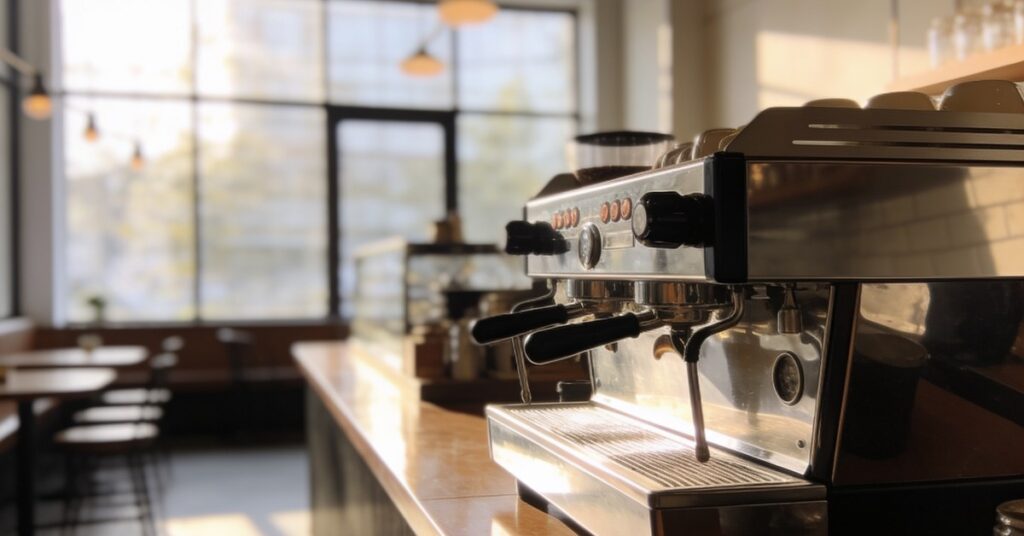
High-quality equipment is the backbone of your daily workflow and directly influences the consistency of the beverages you serve. While a manual steel tamper is available from £20, many professional baristas prefer a spring-loaded tamper costing between £50 and £60 to ensure consistent pressure. Investing in the right coffee machine and grinder is essential, as these are the workhorses of your business. Your baristas will thank you for providing them with a high-performance espresso machine that allows them to showcase their skills, including intricate latte art.
Important / Remember: For high-volume operations, investing in an automatic tamper like the Puqpress Q2 (£850) is a prudent decision that prevents repetitive strain injury and streamlines your barista workflow, which is crucial when you are striving to deliver the best coffee to your customers. Additionally, choosing the right coffee shop POS system is vital for tracking sales, managing inventory, and analysing your profit margins effectively. A digital system will save you hours of manual work every week, allowing you to focus on growing your coffee business rather than fighting with spreadsheets.
Marketing Plan for Your Grand Opening
Marketing a new café relies heavily on establishing a strong local presence and leveraging digital tools to capture search intent from nearby residents and workers. Start by setting up a Google Business Profile with accurate information regarding your hours, address, and high-quality photos, while incorporating neighbourhood tags and keywords like „coffee near me” to improve your local SEO performance. When you optimise your Google Business Profile, you significantly increase the likelihood that local customers will find your café before your competitors. Your opening day should be a celebration of your brand, designed to turn heads and establish a loyal customer base from the very first pour.
- Host a soft launch event to gather initial feedback before your official opening day.
- Implement a loyalty programme on your first day of operation to drive repeat business.
- Distribute flyers to nearby offices and gyms for cross-promotion, which is a great way to grow your customer base.
- Use Spotify Ads targeted by location and time of day to reach your specific audience.
- Showcase latte art and behind-the-scenes content on social media to build anticipation.
- Engage with local influencers or community leaders to spread the word about your grand opening.
Frequently Asked Questions
What is the most important legal requirement when starting a coffee shop?
The most important legal requirement is registering as a food business with your local authority at least 28 days before opening, as this ensures your premises are inspected and approved for health and safety standards. Failure to register with HM Revenue and Customs and the local authority can lead to severe fines and immediate closure of your new venture.
How can I ensure my café menu is profitable?
You can ensure profitability by strictly monitoring ingredient costs, comparing supplier pricing twice a year, and using a strategic menu layout that highlights high-margin items without using distracting currency signs. It is essential to understand the cost of every item you serve to ensure your coffee shop pricing strategy covers all overheads and generates a healthy profit margin.
What should I prioritise when selecting a site for my café?
Prioritise a location with high foot traffic, correct 'Class E’ legal classification, and sufficient infrastructure to support commercial catering equipment, all while keeping your rent within 10% to 15% of your projected gross sales. A site that offers easy delivery access and waste disposal is also critical for the daily efficiency of a busy coffee business.
How much working capital should I hold in reserve?
You should hold enough working capital to cover 3 to 6 months of operating expenses, plus a 10% contingency buffer to protect your business against unforeseen market fluctuations or initial growth phases. Having a solid financial cushion is one of the most important pieces of advice for any business owner dreaming of opening an independent coffee shop.
Mastering the logistical and financial intricacies of how to open a cafe is the definitive gateway to establishing a resilient and thriving hospitality business. Prioritise your working capital reserves and strict regulatory compliance from the outset to safeguard your long-term operational success.