Launching a successful cleaning service requires more than just industry expertise; it demands a rigorous approach to financial planning, regulatory compliance, and operational management. This guide provides a clear, professional roadmap to help you navigate the complexities of starting your own business, from setting profitable rates and securing the correct insurance to mastering staff recruitment and client acquisition. By following these established best practices, you will gain the clarity and confidence needed to build a sustainable and compliant enterprise from the ground up.
The most immediate step to starting a cleaning service is choosing your legal structure and drafting a comprehensive business plan that outlines your financial trajectory for the first three years. You must define your specific market niche—whether residential, commercial, or specialist—and establish your pricing model immediately to ensure you can cover overheads like insurance and equipment. Success in this industry is built on the foundation of professional operational policies, consistent service delivery, and strict adherence to UK tax and employment regulations from day one. Many entrepreneurs often overlook the foundational research required when considering a Cleaning Service How To Start, but mastering this phase is what separates a long-term enterprise from a temporary side hustle. When you are Starting Out In Business, you need to understand that the Demand For Cleaning Services is high, but competition is fierce, meaning your Professional Cleaning standards must be impeccable from the very first appointment. Whether you decide to Start Small or launch with a full team, your Business Strategy must account for the specific needs of the UK Cleaning Industry.
Cleaning service how to start
The Comprehensive Guide to Launching Your Cleaning Business in 2026
Establishing your own cleaning venture requires careful planning, including clear service definition, formal company registration, and securing necessary insurance. Essential preparation involves selecting a specific niche, gathering professional-grade supplies, and attracting your initial base of clients.
Quick-Start Checklist for New Entrepreneurs
- Research the local market to identify your preferred niche, such as residential properties, corporate offices, or end-of-tenancy deep cleans.
- Select a professional business name and create a recognisable brand identity to ensure a strong market presence.
- Register your business status; decide whether to operate as a sole trader or incorporate as a limited company.
- Open a dedicated business bank account to keep your finances separate and organised.
- Obtain comprehensive insurance, specifically public liability, to protect yourself should any accidental damage occur during a professional engagement.
Strategic Advantages and Financial Considerations
One of the primary benefits of this sector is the low barrier to entry, as the initial investment needed to begin is relatively minimal. In regions like London, start-up costs may be slightly higher, but overheads generally remain low.
To maintain profitability during the early stages, keep your expenses under control:
- Invest only in essential, high-quality tools, such as an efficient mop, a broom, microfibre cloths, and effective cleaning solutions.
- Request that clients provide their own vacuum cleaners to reduce your equipment burden and prevent the transfer of dirt or allergens between different households.
- Prioritise personal safety by using robust rubber gloves and appropriate protective attire to prevent skin irritation from cleaning chemicals.
- Utilise heavy-duty brooms and extendable dusters to reach difficult areas that standard equipment might struggle to handle.
Building Your Client Base
Gaining your first contract often starts close to home. Many successful cleaners began by offering services to friends and family, which then developed into a reliable reputation through word-of-mouth recommendations.
Follow these steps to generate new business:
- Communicate your services to neighbours and local community groups, including digital platforms and mobile applications.
- Distribute clear, professionally printed business cards to potential clients whenever opportunities arise.
- Focus entirely on service excellence; delivering an impeccable job for your first clients is the most effective way to guarantee repeat bookings and referrals.
Success in the cleaning industry relies less on prior experience and more on consistency and the ability to maintain high service standards for your clients. By keeping your operational costs low and your service quality high, you can build a sustainable and thriving business.
Initial Strategic Planning and Business Plan Development
Strategic planning for Cleaning Businesses involves creating a formal business document that maps out your projected monthly revenue, operational costs, and the specific path to profit you intend to follow over your first three years. Does this sound like a daunting amount of paperwork? Trust me, having this roadmap is the difference between Running A Business and just having a very busy hobby. When Creating A Business Plan, you must explicitly define your target market niche, such as Domestic Cleaning, Commercial Cleaning, or Specialist Cleaning services like Window Cleaning or Carpet Cleaning to ensure your branding and resources are focused correctly. Your document should include your official Business Name, registered address, and contact details, serving as the central reference point for your company’s identity and long-term goals.
Operational stability is achieved by setting firm policies regarding client entry, cancellation notice periods, and secure key handling protocols, which protect both you and your clients. By including projected costs for Business Insurance and local permits in these initial financial forecasts, you avoid the common pitfall of underestimating the true cost of doing business. This proactive approach ensures that your service offering is not only profitable but also structured to handle the practical realities of daily client interactions and site access. As a Business Owner, you should also decide early on whether you will Use The Client’s Cleaning Products or provide your own to maintain consistency. Remember, your Business Model determines your scalability; if you intend to Grow Your Business, you must document every procedure so that new staff can replicate your success.
| Business Aspect | Key Consideration |
|---|---|
| Market Niche | Residential vs. Commercial vs. Specialist |
| Financials | 3-year revenue and cost forecast |
| Operations | Entry, cancellation, and key policies |
Legal Framework and How to Register Your Business
Legal compliance begins with choosing the right structure when you Register The Business. Whether you operate as a Sole Trader or a Limited Company, you must keep your paperwork impeccable from day one. I’ve seen too many promising startups trip up on simple regulatory hurdles, so follow these steps to stay on the right side of the law:
- Register your business status with HMRC or Companies House to ensure your tax obligations are clear and you start your New Business Venture correctly.
- Open a dedicated Business Bank Account to keep personal and professional finances separate, which is essential for audit transparency.
- Obtain a Waste Carrier Licence if you handle commercial refuse as part of your service, a step often missed by those Starting A Cleaning Company.
- Register with the ICO if you process client personal data, which is a legal requirement for most firms holding customer records.
- Verify local council requirements for specialised cleaning licenses, especially for window cleaners in certain regions.
You must also ensure full compliance with COSHH (Control of Substances Hazardous to Health) regulations, which govern how you store, use, and dispose of the Cleaning Chemicals required for your work. Furthermore, if you are involved in the UK Cleaning Industry, it is wise to align your practices with the British Institute Of Cleaning Science or the British Cleaning Council to ensure you meet the highest possible safety standards. Providing Cleaning Services requires a commitment to safety that goes beyond basic training; it involves constant vigilance regarding the products you bring into a client’s home.
Financial Management and Different Types of Cleaning Service Pricing
Pricing your services for profit requires a balance between market competitiveness and the recovery of your annual operating costs, which for a small firm typically include around £5,000 in supplies and £2,000 in initial equipment investment. Important: Always build a 10% to 15% time buffer into your quotes, because even the best cleaners hit unexpected snags that eat into your profit margins. When you are Setting Up A Cleaning Business, you must consider whether you are providing Deep Cleaning Services, which require more time and specific Cleaning Tools, or routine maintenance. By Setting Up A Cleaning service with a clear financial structure, you protect your cash flow and ensure you can afford the necessary Business Licences.
Developing a Profitable Price Structure for Cleaning Services
A professional pricing strategy relies on the gross margin formula of multiplying your direct labour cost by two. This simple calculation helps you maintain a 50% gross margin, which is the industry gold standard for sustainability. You should evaluate different pricing models, including flat fees for standard jobs, hourly charges for variable tasks, or square-footage pricing for larger commercial spaces, to determine which best suits your efficiency levels. Setting the right price ensures that you can sustain your business without compromising on the quality of your supplies or the safety of your working environment. When you Start Your Own Cleaning Business, don’t be afraid to adjust your rates as you gain more experience and your reputation for excellence grows.
| Pricing Model | Best Used For |
| Hourly | Variable, non-standard tasks |
| Flat Fee | Standard residential cleans |
| Square-Footage | Large commercial contracts |
Essential Equipment for Running a Cleaning Business
Acquiring professional-grade equipment is the best way to ensure consistent service standards, with a baseline startup kit for a new business typically costing up to £500. Having the right tools isn’t just about the finish; it’s about the speed and efficiency that allows you to take on more clients. When you Start Your Own Business, you must invest in high-quality hardware at the outset, which reduces the long-term risk of equipment failure and improves the overall speed of your cleaning cycles. Your inventory of Cleaning Products And Equipment should be carefully curated to handle the Different Types Of Cleaning you offer.
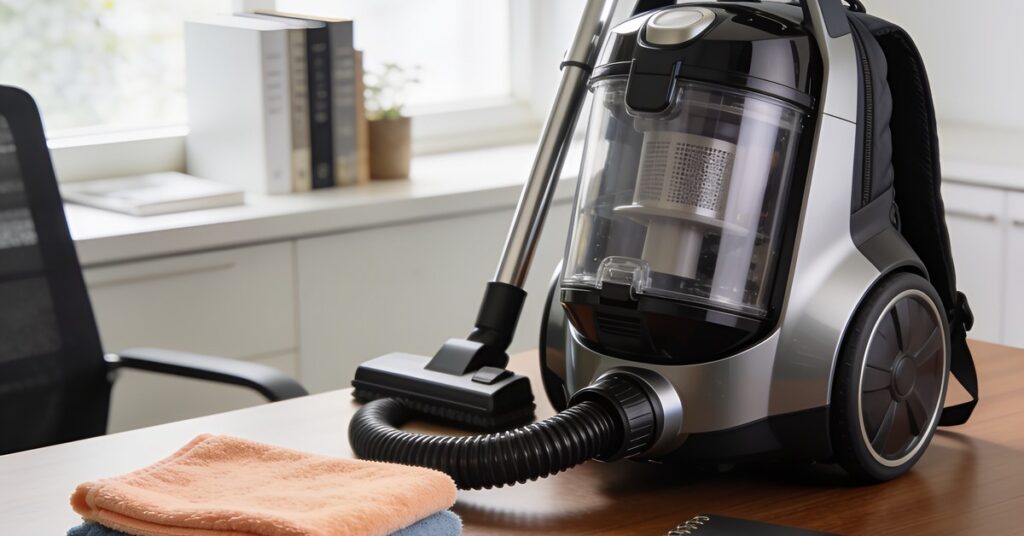
- ProTeam 6 qt backpack vacuum for superior mobility and deep cleaning power.
- Colour-coded microfiber cloths (Green: Kitchens, Yellow: Bathrooms, Blue: Dusting, Red: Toilets) to prevent cross-contamination.
- 15 essential chemical products including degreasers, descalers, and specialised Oven Cleaning solutions.
- Protective gear: Reusable gloves, disposable shoe covers, and face masks for staff safety.
- A dedicated storage caddy to keep your supplies organised and professional when arriving at a client’s home.
Insurance, Bonding, and Risk Mitigation
Insurance and bonding are mandatory components of a professional cleaning company’s risk management strategy. Remember: Employers’ Liability Insurance is a strict legal requirement if you hire anyone, even part-time, and failing to have it can lead to massive fines. Beyond standard insurance, fidelity bonds act as a financial guarantee that protects your clients against the risk of theft by employees, which is often a prerequisite for high-value commercial contracts. When you are Starting A Cleaning Company, you should also consider specific Tool And Equipment Cover, which protects your physical assets—such as your vacuums and mops—from theft or accidental damage while on-site. This coverage effectively Covers Your Business against the most common operational hazards.
Client Acquisition and How to Market a Cleaning Business
Acquiring your first clients is best achieved by establishing a digital footprint through a free Google Business Profile. From my experience, don’t underestimate the power of local networking; drop off professional flyers at estate agents and local offices to build a recurring client base that you can rely on month after month. Integrating this outreach with your initial strategy for a Cleaning Service How To Start ensures you are not just waiting for the phone to ring, but actively generating leads to Promote Your Business. Whether you are providing a Domestic Cleaning Service or a commercial contract, you’ll need a consistent strategy to attract and retain clients.
- Sign up for service platforms like Wecasa to build initial momentum.
- Offer introductory discounts for recurring weekly or bi-weekly contracts.
- Implement a voucher code system for client referrals, as word-of-mouth is the most powerful tool for Local Cleaning Businesses.
- Distribute high-quality Business Cards to local landlords, estate agents, and small office managers.
- Use social media to showcase before-and-after photos, which is highly effective for Deep Clean demonstrations.
Staffing and Starting Your Own Cleaning Business
Scaling your cleaning service requires disciplined hiring and management, starting with the legal obligation to pay all staff at least the National Minimum Wage. Use platforms like Indeed to manage your recruitment, and remember that sponsored listings can significantly speed up your time-to-hire. When you are Owning Your Own Business, the quality of your staff reflects directly on your brand; therefore, you must invest time in training them on the specific Type Of Cleaning Service you offer, whether it is routine domestic work or a specialist Deep Clean. Running The Business successfully requires a balance between oversight and empowering your team to perform at their best.
Evaluating and Monitoring Personnel
- Conduct a 10-minute initial phone screen for communication skills and professionalism.
- Perform a trial or test clean to evaluate work ethic in practice.
- Monitor KPIs like punctuality, attendance, and client feedback to track performance.
- Report new employee data to the relevant authorities immediately to satisfy tax and insurance requirements.
- Maintain a culture of safety by ensuring all staff have the necessary knowledge of chemical handling and physical stamina.
Frequently Asked Questions
Is it better to operate as a sole trader or a limited company?
Operating as a sole trader is simpler and involves less paperwork, making it ideal for those just starting out. However, a limited company offers greater protection for your personal assets and may be more tax-efficient as your turnover grows.
Do I need a special license for Oven Cleaning services?
While there is no specific national license for oven cleaning in the UK, you must ensure your chemicals comply with COSHH regulations. You should also verify if your local council has any specific environmental health requirements for businesses handling degreasers and waste materials.
What is the most effective way to start a Cleaning Franchise?
Starting a cleaning franchise involves researching established brands with a proven business model and support structure. You should carefully review the franchise agreement, initial investment costs, and the territory rights provided before signing any contract.
How do I handle client data to remain GDPR compliant?
You must register with the ICO if you store personal information such as client names, addresses, or door codes. Ensure all digital records are encrypted and that you have clear policies regarding how long you retain sensitive customer data.
Your firm will thrive by strictly adhering to the gross margin formula of multiplying direct labour costs by two to guarantee consistent profitability. Prioritise these robust operational foundations today to ensure your business remains scalable, compliant, and highly competitive in the long term.