Vans and Pickups That Delivers the Best Value for Your Small Business
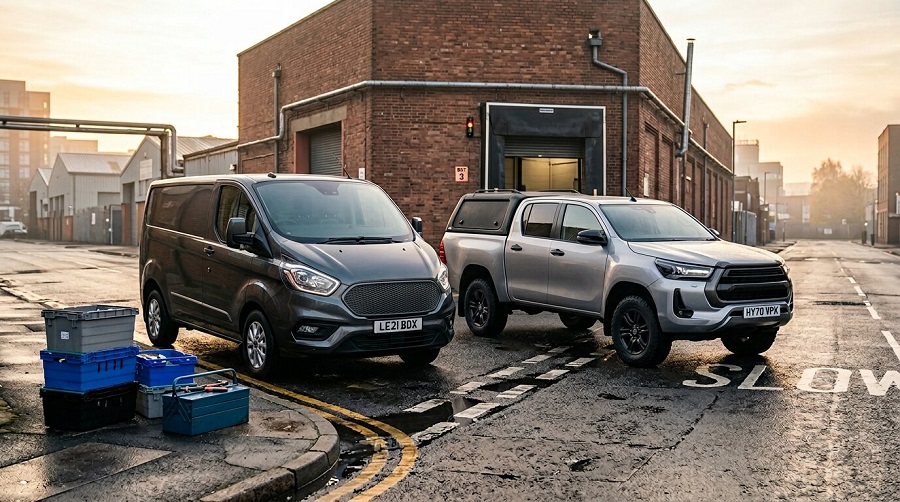
This guide has been put together by Hippo Leasing, the UK's dedicated small business leasing experts, helping sole traders and growing companies get into the right commercial vehicle at the right monthly rate.
Choosing the right vehicle for your small business is one of those decisions that can quietly shape how your operation runs day to day. Too small and you are making unnecessary extra trips; too large and you are paying for capacity you never use. The good news is that the current commercial vehicle market offers genuinely excellent options across a wide range of business types, from light courier work to heavy-duty site deliveries.
This guide compares seven of the most popular vans and pickups available to small businesses right now. Whether you are just starting out or looking to upgrade your existing fleet, each vehicle has been chosen because it offers a compelling mix of practicality, running costs, and value. Read on to find out which one fits your business best.
The Citroën Berlingo: The Lean, Nimble City Worker
If your business keeps you moving in and out of towns, tight side streets, or urban loading bays, the Citroën Berlingo deserves serious attention. It sits in the compact van segment but punches well above its weight when it comes to load volume, offering a practical cargo area that handles everything from retail deliveries to tradesperson kit without complaint. The driving position is car-like and comfortable, which matters a great deal if your driver is behind the wheel for several hours a day.
The Berlingo is particularly well-suited to independent couriers, florists, and small e-commerce businesses that need a reliable urban workhorse. Running costs are competitive, partly because the diesel engine options are efficient at lower speeds and partly because the compact dimensions mean parking and manoeuvring costs in city centres are kept to a minimum. It is available in both standard and long wheelbase configurations, giving you some flexibility depending on how much you typically carry.
Citroën has also made meaningful improvements to the Berlingo's interior over recent years, with better driver-assist technology and a cleaner dashboard layout that makes the cab a more pleasant place to spend a working day. For a small business on a budget, this is a vehicle that rarely puts a foot wrong.
Why small businesses choose the Berlingo:
- Compact dimensions ideal for urban and suburban routes
- Strong load volume relative to its external size
- Efficient diesel powertrains that keep fuel costs manageable
- Available in standard and long wheelbase variants
- Car-like driving experience reduces driver fatigue
- Competitive monthly lease rates for budget-conscious businesses
The Ford Transit (Medium Roof): The Benchmark Medium Van
The Ford Transit needs little introduction. It has been a staple of British commercial roads for decades, and the medium roof version in particular sits in a sweet spot that suits a huge range of businesses. It offers enough interior height to work comfortably inside the van, which is a genuine consideration for electricians, plumbers, and builders who spend time rummaging through racking, while remaining manageable on the road and in standard car parks.
Ford has continuously refined the Transit over the years, and the current generation benefits from a strong turbodiesel engine lineup, a well-sorted suspension setup, and a surprisingly refined driving experience for a vehicle of this size. The load area is generous, the payload capacity is competitive, and the availability of manufacturer-fitted options such as shelving, lining, and partitions makes it easy to convert for specialist use. It is a particularly natural fit for mobile service businesses such as heating engineers, locksmiths, or small removals operators.
One of the Transit's underappreciated strengths is its dealer network and parts availability. If something goes wrong, getting back on the road quickly is rarely a problem, which for a sole trader without a backup vehicle, can be the difference between keeping a client and losing one.
Why small businesses choose the Ford Transit (Medium Roof):
- Versatile interior suitable for shelving and racking conversions
- Wide choice of engine options to match usage patterns
- Extensive UK dealer and service network
- Strong resale value supporting competitive lease rates
- Comfortable cab for long-distance and multi-drop work
- Proven reliability across decades of commercial use
The Renault Master (Luton): The Heavy Lifter for Growing Businesses
The Luton body configuration transforms the Renault Master from a capable large van into something altogether more suited to businesses that regularly move bulky or high-volume goods. The box body extends over the cab, creating a substantial cargo area, and most Luton versions come fitted with a tail lift as standard or as an easily specified option. If you are running a small removals company, a furniture delivery service, or a catering supplies operation, this configuration removes a significant amount of physical strain from your daily workload.
The Renault Master itself is a well-regarded platform, offering a smooth and capable drive that belies its size. The turbodiesel engine is well-matched to loaded motorway and A-road work, and the driving position is elevated enough to give good forward visibility, which drivers generally appreciate on longer runs. Fleet operators across the UK have long trusted the Master, and that track record translates into favourable lease terms and straightforward maintenance support.
It is worth noting that the Luton body does require some thought around access routes, as the overall height is considerably greater than a standard van. However, for any business where volume is the primary challenge rather than access, the Renault Master in Luton form is a highly practical and cost-effective solution that scales naturally as a business grows.
Why small businesses choose the Renault Master (Luton):
- Box body provides exceptional cargo volume
- Tail lift option dramatically reduces manual handling
- Motorway-capable diesel engine suited to longer hauls
- Ideal configuration for removals, deliveries, and catering supplies
- Well-established service and parts network across the UK
- Competitive leasing options available for growing businesses
The Vauxhall Combo Cargo: The Quiet Overachiever
The Vauxhall Combo Cargo does not always make the headlines, but businesses that run one tend to keep coming back to it. Sharing its underpinnings with the Citroën Berlingo and the Peugeot Partner, it benefits from a thoroughly developed platform while bringing its own pricing and specification advantages to the table. For small businesses looking for a compact van with a no-fuss approach to daily duties, it is a consistently strong performer.
The Combo Cargo is available in two lengths, and even in its standard form the load length is genuinely impressive for the van's overall size. The doors and loading options are practical, and Vauxhall has made sure the cab is properly equipped even at base specification levels. The brand's IntelliLink infotainment system and driver assistance features are a step above what you might expect from a workaday compact van, and that makes day-to-day driving noticeably more pleasant.
This vehicle suits a broad range of small businesses particularly well, from small-scale logistics and courier operations to tradespeople who do not need the bulk of a larger panel van. The lease rates are typically attractive, partly because the platform is mature and reliable, and partly because Vauxhall's commercial vehicle arm has become increasingly competitive on pricing in recent years.
Why small businesses choose the Vauxhall Combo Cargo:
- Excellent load volume for its compact footprint
- Well-equipped cab across all specification levels
- Two length options for flexible load planning
- Strong reliability record on a proven platform
- Attractive lease rates relative to the competition
- Well-suited to tradespeople and light delivery work
The Volkswagen Transporter T6.1: The Premium Small Van
The Volkswagen Transporter T6.1 occupies a premium position in the medium van market, and for many small business owners, that premium is entirely justified. The build quality is exceptional, the driving experience is genuinely car-like in the best possible way, and the interior finishes create an impression of quality that matters when clients occasionally travel in the cab or when the vehicle doubles as a calling card for your brand. It is the sort of van that arrives on site and quietly says something positive about the business behind the wheel.
Beyond aesthetics, the Transporter T6.1 is deeply practical. The load area is well-proportioned, the payload is competitive for the segment, and the range of body styles including panel van, kombi, and window van makes it versatile across a number of applications. It is a natural fit for professional services businesses such as IT support, photography, or high-end property maintenance, where client perception matters as much as the vehicle's carrying capacity. The DSG automatic gearbox option is also worth considering for drivers who spend a lot of time in stop-start urban conditions.
Lease rates for the Transporter T6.1 are higher than some competitors, but the total cost of operation, including residual values, reliability, and driver retention, often makes the case for the additional monthly outlay. Businesses that invest in the right vehicle tend to find it pays dividends in ways that are not always immediately obvious.
Why small businesses choose the Volkswagen Transporter T6.1:
- Premium build quality that enhances brand perception
- Genuinely car-like driving dynamics
- Multiple body style options for different business applications
- DSG automatic gearbox option for urban driving
- Strong residual values support competitive leasing
- Ideal for client-facing and professional services businesses
The Isuzu D-Max Diesel: The Tough Pickup for Demanding Work
The Isuzu D-Max stands apart from the rest of this list by virtue of being a pickup truck rather than a van, and that distinction matters enormously for the right kind of business. If your work takes you off the tarmac regularly, whether across agricultural land, construction sites, or rural estates, a double-cab pickup with four-wheel drive capability is simply a more appropriate tool than any conventional van. The D-Max has built a strong reputation in the UK for durability, off-road ability, and low whole-life running costs.
The diesel engine in the D-Max is well-suited to the demands of commercial use, offering strong torque for towing and hauling while remaining reasonably efficient on longer road runs. The payload capacity is generous, and the bed is large enough to carry equipment, aggregate bags, or materials that would be impractical in even the largest panel van. Landscape gardeners, agricultural contractors, fencing companies, and rural property businesses will find the D-Max handles their working environment with ease.
Isuzu has also improved the D-Max's interior and driver technology in recent years, addressing the criticism that older models felt basic compared to car-derived vans. The current version offers a comfortable and well-equipped cab, modern connectivity, and safety features that meet the expectations of a contemporary business vehicle. It is a robust, honest working tool that asks very little of its operator in return for a great deal of capability.
Why small businesses choose the Isuzu D-Max Diesel:
- Genuine four-wheel drive capability for off-road and rural environments
- High payload and towing capacity for heavy loads
- Durable construction suited to demanding working conditions
- Improved cabin quality and modern technology
- Ideal for agriculture, landscaping, and construction-adjacent businesses
- Competitive lease rates in the pickup segment
The Mercedes-Benz Sprinter: The Flagship for Serious Operations
The Mercedes-Benz Sprinter is, by some measures, the van that all others are measured against. It has been the go-to large panel van for serious commercial operators for well over two decades, and its continued popularity is testament to just how good it is as a working vehicle. The Sprinter is available in a wide range of body lengths, roof heights, and payload configurations, making it adaptable to almost any application where a large van is the right tool.
For small businesses that operate at the larger end of the commercial vehicle spectrum, whether that is refrigerated food delivery, medical equipment logistics, or professional events and exhibition work, the Sprinter delivers the capacity and reliability that those operations demand. The cab is well-designed, the driver assistance technology is among the most advanced in the segment, and Mercedes-Benz's service network is thorough and professional. When your business depends on the vehicle turning up, the Sprinter's reliability record is a genuine commercial asset.
It is true that the Sprinter commands a higher monthly cost than many alternatives, but for businesses that need its capabilities, the value proposition is strong. The combination of payload, volume, technology, and brand confidence creates a vehicle that earns its position at the top of the market. For a growing small business that is ready to operate at this level, leasing a Sprinter is a sound and scalable decision.
Why small businesses choose the Mercedes-Benz Sprinter:
- Industry-leading range of body configurations and sizes
- Advanced driver assistance and safety technology
- Strong reliability record for business-critical operations
- Ideal for logistics, refrigerated delivery, and events businesses
- Premium brand perception supports client confidence
- Scalable solution as business volumes grow
Choosing the Right Vehicle Is Choosing the Right Business Partner
Each of the seven vehicles covered in this guide brings something genuinely useful to a small business, and none of them is a wrong choice in the right context. The real task is matching the vehicle's strengths to your specific operation, whether that means the nimble practicality of the Berlingo for urban routes, the raw capability of the D-Max for rural and off-road work, or the flagship carrying capacity of the Sprinter for larger-scale logistics. When the fit is right, a well-chosen commercial vehicle does not just transport goods; it actively supports growth.
Frequently Asked Questions
What does a typical business van lease agreement cover?
A standard contract hire package generally includes the vehicle itself, road tax for the full duration of the lease, and breakdown assistance. You can also add fully maintained packages that cover scheduled servicing, tyres, and MOTs, along with optional extras such as GAP insurance or relief vehicle provision. Hippo Leasing builds packages around what your business actually needs, so there is no obligation to pay for features that do not add value to your operation.
How does van leasing work?
Van leasing, commonly referred to as contract hire, is a straightforward arrangement where you pay a fixed monthly amount to use a vehicle for an agreed period, usually between two and five years. At the end of the term, you simply return the vehicle. You never own it, but you also never absorb the financial hit of depreciation, and you are consistently driving a modern, well-maintained vehicle. Hippo Leasing arranges contract hire agreements for businesses of all sizes across the UK.
Is van leasing a realistic option for a business that has not been trading for long?
In many cases, yes. Newer businesses may be asked to provide additional supporting financial information or a personal guarantee, but leasing is often more accessible than a traditional business loan for a vehicle purchase. Hippo Leasing works with businesses at different stages of their development and can advise on the most suitable approach based on your trading history and credit profile.
What are the key advantages of leasing a van rather than buying outright?
The primary benefits come down to cash flow and financial predictability. Leasing removes the need for a significant upfront capital payment, freeing up working capital for the business. Your monthly outgoings are fixed, which simplifies budgeting considerably. Road tax is typically included, and a maintained lease covers servicing and tyres as well. Crucially, you carry no risk from the vehicle losing value over time, and upgrading at the end of the contract is straightforward.
How should I work out the right annual mileage for my lease agreement?
The most important thing is to be honest and to round up rather than down. Excess mileage charges at the end of a contract are one of the most common and avoidable surprises in leasing. Look carefully at your current driving patterns, consider any business growth that might increase your usage, and talk through the numbers with your consultant before you commit. Hippo Leasing advisers will work through this with you before any agreement is signed.
Can my business offset the cost of a leased van against tax?
Yes, in most cases. If the vehicle is used wholly or primarily for business and the lease is taken out in the business's name, the payments can typically be offset against taxable profits. VAT-registered businesses are generally able to reclaim 50% of the VAT on lease payments, or 100% where the vehicle is used exclusively for business purposes. As individual circumstances differ, we always recommend discussing the specific tax treatment with your accountant before proceeding.
Hippo Leasing is a UK-based commercial vehicle leasing specialist, supporting small and medium-sized businesses in finding the right van or pickup at a competitive monthly rate. To receive a no-obligation quote on any of the vehicles featured in this article, head to hippoleasing.co.uk or get in touch with our team directly.